

Samoa 🇼🇸 – The World’s Fattest Country | Land of the Heaviest People
Hello, Salam, Sat Sri Akal, Ram-Ram Ji. Right now, we are inside Nadi International Airport. Here, we have already checked in our luggage. There’s a queue here, and from here we are going to a new country. The name of the new country is Western Samoa. Our flight from here is FJ 253, which will depart at 10:30. Let’s collect our boarding pass and then move ahead.
Okay, boarding pass is done, and there’s quite a decent crowd here. Honestly, I didn’t expect this much crowd. In Fiji, many airlines operate, but for Pacific countries, Fiji Airways is the most active airline. Immigration has been cleared, and here you can see the airport – there’s Burger King here, and next to it gates number 8, 9, and 10. On the other side, you can see gates number 1, 2, and 3. In total, there are 10 gates.
This is the entire crowd you can see sitting here, not many people beyond this. There’s a currency exchange counter, Burger King, and a nicely built duty-free shop. Let me show you – it’s quite big, with multiple entries and exits. From here, the way to board the flight is inside this section. If you walk ahead, you’ll find flights, including one from the Australian Air Force parked nearby. Our flight is about 1 km away, so we’ll have to walk.
Now the flight is ready, and there’s a huge crowd here.
Thank you so much.
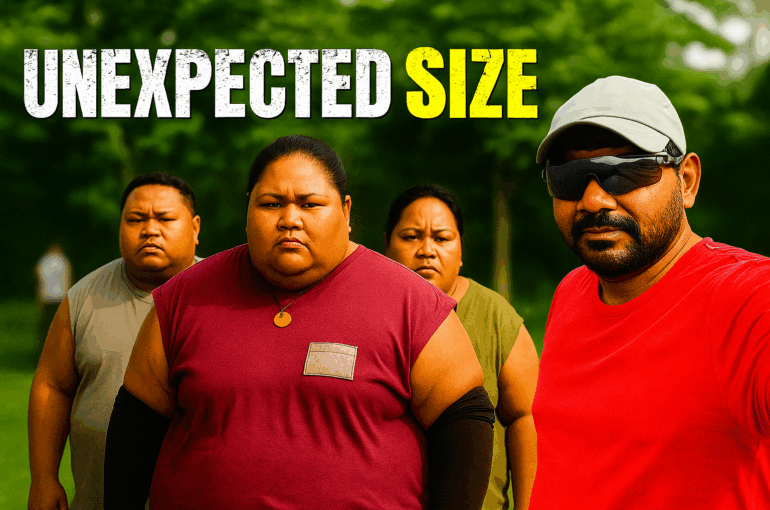
Welcome to Samoa! The average people here are very healthy. For example, the lady I just saw was above 6 feet tall and probably weighed over 150 kg. In general, people here are very well built.
Here is BSP Bank, and I am withdrawing some cash using my card. I just withdrew 150, which is called “Tala” in Western Samoa. This is the arrival area. A moment ago, there was some live music being played, but now everything is quiet. It’s 2:30 at night, so we’ll stay at the airport for the next two and a half hours.
The hotel would have cost me around ₹34,000 without reason, so why waste ₹4,000?
With this, welcome to the 128th country of Cycle Baba’s World Tour – Western Samoa! Behind me, you can see the international airport. The flight schedule here is such that flights leave at 5:00 am, another at 6:00 am, and then at 7:30 am. After that, there are no flights from here.
This is the international airport – look how beautiful and well-designed it is. Now, we are heading out of the airport, and from here we will go to Apia, the capital city, which is about 40 km away.
But first things first – grab a cup of coffee as soon as you wake up. So, with a coffee in hand, we’ll sit and wait here for the bus.
Chinese restaurants and KTV bars are also running here, which shows that Chinese influence is quite visible. I also noticed that even Chinese insurance services are available here. Look at this – there’s also a UNICEF office.
I bought a SIM card, which cost 20 Tala (around ₹700). It comes with 5GB of data. This is the local market area. Here you can see the National Bank of Samoa.
The traffic is moving smoothly, and there’s absolutely no noise. It feels so peaceful – no honking, no chaos, no dirt. It’s a small island country, and now we have reached the city centre.
Here you can see the Apia Town Clock tower. On the side, there’s McDonald’s. This is the exact city centre, the heart of the capital city. Even local brands like matchsticks and mosquito coils have advertisements displayed here.
 Most of the people you see here are quite tall and healthy – hardly anyone below 5 feet 5 inches. Most cars I notice are Chinese brands.
This place is the Cultural Village, and here is a church which appears in most photos of Samoa. We’ll visit the Cultural Village later, but first, let’s go inside the church.
Since today is Monday, there isn’t much crowd. On Sundays, however, the church is so full that you can’t even find a place to stand. Now let’s go inside and see its beautiful interior.
There are plenty of seats here but hardly anyone around, the place is open and peaceful. The houses here are also built in the same way – completely open. There’s no concept of air conditioners or fans. During the day it gets a little warm, but at night it becomes cool.
Here you can see the village centre. Even the roof is made of wood, built according to local needs. It looks amazing, very well constructed. Samoa is a small country with a population of around 200,000 people, and in this city itself there are only about 400 residents. Still, everything is so well maintained. There’s even a small coffee shop here.
Ahead of us is the traditional village, specially built for tourists. From where we’re standing, Sydney is 4,000 km away, Nadi is 1,200 km, New York 12,000 km, Los Angeles 8,300 km, Berlin 19,000 km, Hong Kong 12,000 km, Tokyo 8,300 km, and Uluru 4,100 km. This is the Traditional Visitor Information Centre.
This country has two main islands – Upolu and Savai’i. Right now, we are on Upolu. Apia, the capital city, is located here, and the entire area has been developed for tourism because many visitors come to Samoa.
In this Cultural Village, one of the attractions is a natural swimming hole. Sea water flows into a deep pit, about 30 metres down, and moves in and out with the waves. There’s also a blowhole where water gushes powerfully upwards whenever the waves crash in.
You can also see traditional Samoan wooden boats, carved from a single tree. The side balance is added later to keep it stable. The roofing material is made from coconut husk. Right now, there are only five or six people here in the Cultural Village. It’s already 11:00 am, yet very quiet.
Most houses here are built without walls – just posts to hold up the roof. Right opposite the village is the port. Samoa is truly beautiful, an island nation surrounded by the Pacific Ocean with many smaller islands around it.
Behind me, you can see the port. Among the 12 Pacific Island nations, Samoa was the first to gain independence. It became free from New Zealand on 1st January 1962. Actually, there are two Samoas – where I am now is Western Samoa, and then there is American Samoa, about 70–80 km away. That one is still part of the USA.
The waves here are beautiful and strong. While walking around, I even met another Indian YouTuber. Around 99% of Samoa’s population is Christian. Churches can be found everywhere. When I travelled 40 km from the airport to the city, I counted around 50 churches along the way. Today is Monday, so it’s quiet, but on Sundays everything shuts down as everyone goes to church.
Look at this – a handmade basket woven from coconut leaves.
Wandering around, I’ve now reached the supermarket, or what you can call a flea market. If you want to see the real culture of a country, you must visit its flea market. This is the big local market here.
Inside the market, I saw a bunch of bananas priced at \$20. Here is something called cacao – the fruit used to make chocolate. I’ve now entered the market properly. You can see bundles of different vegetables – cucumbers, tomatoes, onions, chillies, ginger – all tied neatly in small packets.
The people here are very friendly, and you can find all sorts of small household and local items in this market.
They don’t really keep rice papad here. These are banana chips. You’ll also find pumpkins placed everywhere.
This is a souvenir shop. If you want to buy something wooden, you can get it here. But carrying wooden items to the next country can be a little tricky since some countries don’t allow it.
Now look at this – cassava has been roasted from below, and people eat it like this. Let me show you something else. Even in this flea market, the Chinese have taken a foothold. In between small local stalls, you’ll also find Chinese shopkeepers.
I greeted one:
“How are you?”
“Good. What’s your name?”
“I’m Raj, from India.”
“From India? Nice.”
“Yes, just here on vacation.”
“That’s nice.”
“Yes, my first impression is amazing – and there are lots of waterfalls, they’re beautiful.”
I asked about the name of the mountain, and they said “Baia.”
Really nice people – very friendly and cheerful. Almost every woman here carries a hand fan. We also had fans back in our days, and they use the same here. You’ll see small oranges, big oranges – everyone is just sitting calmly. Nobody bothers you to buy something. The best part is that if you want something, you can take it, otherwise people don’t push you. The locals are very patient, peaceful, and easy-going. Even on the roads, there’s no rushing around – they just stand calmly.
Now, there’s a funny thing about bananas here. People debate which variety is the best. Some say one type is better, others prefer another.
One more thing – women wear flowers tucked behind their ears. If she’s married, she wears it on the left side. If she’s unmarried, it’s on the right side. So, that’s how you can tell the difference.
Right here, some people are selling tobacco. They grow and process it locally, then pack it into cigarettes. Since cigarettes are expensive, loose tobacco is sold more commonly.
This is the main bus and taxi stand of the country. You’ll see five or six buses parked here at a time.
I also saw traditional tattoo artists here. They make tattoos by hand, not with machines. I went to them, but they told me it’s only allowed if you wear a traditional wrap-around cloth, like a lungi. Otherwise, you can’t sit there. They claim the art of tattooing actually originated here in Samoa. Everyone here has tattoos on their bodies, just like older generations in India used to. The technique is very raw – no machines, no modern ink – all traditional methods.
As I wandered further, we moved out of the city towards the countryside. To cross from one side of the island to the other is about 30–35 km. We reached a place called Papapapai-tai, where there’s a beautiful waterfall. It had been raining heavily on the way. I even met a friend by chance on the road – he had told me earlier he was coming to Samoa, but I didn’t know I’d bump into him like this!
The waterfall was stunning – tall and slim, surrounded by dense forest. It keeps flowing because it rains frequently here, being so close to the sea.
My friend had hired a car, so I joined him; otherwise, travelling here is expensive as car rentals cost a lot. While riding, my cap flew off for the first time ever!
We then visited the driver’s house because he needed to stop by. The house had a proper kitchen setup, and farming around it was amazing. The flowers were beautiful, and agriculture here is strong.
I saw cassava, bananas, and eggplants. They were preparing chicken with bananas. There’s a regular water supply and 24-hour electricity in the house.
I also saw taro – at first, I thought it was colocasia (arbi), but here they call it taro, and it’s a staple food. Then there was a cocoa tree, locally known as “koko Samoa”. The seeds are dried and made into cocoa powder and chocolate.
Another unique thing – when someone in the family dies, they are buried right outside the house, not in a separate cemetery. Every family has its own graves in front of their homes, surrounded by plants and flowers. Only family members are buried there.
Here, instead of cemeteries like we have, people bury their family members right in their own compound. Inside the same compound, they also keep pigs – lots of them – and eat them too. Someone offered to show me their pigs, and as soon as he called, all the pigs came running.
One of them was already prepared – they said it’s dried and preserved for later use. Imagine, in such a small space, about 20 people live together. They are even building a new house nearby because the family has grown larger.
They also showed me how coconut seeds are prepared – once the coconut is dried, it’s later used as a seed to grow new trees.
This is the village supermarket – very small. There’s also a little gift shop nearby. From there, we moved towards a place called “Trench.” I’ll explain what it means. The entry ticket costs 20 Tala.
The trench is around 30 metres deep, connected to the sea through an underground tunnel. The seawater flows all the way here. This is said to be the deepest trench in the world. The water here is salty because it’s directly linked to the ocean, unlike lakes where water is fresh.
They have strict rules – no smoking, no eating, no drones allowed. The water looked very deep and blue, but we didn’t go swimming, as we’d have to climb down many stairs. Some people were bathing below where the seawater entered.
Later, we returned and I made a short video. After exploring everywhere, it was time to drop my friend at the airport for his flight. On the way, we planned to stop for coffee.
After saying goodbye to my friend, I came to an Indian restaurant called “Tifin Oma – Taste of India.” Honestly, there’s hardly any Pacific island left where you won’t find an Indian restaurant. Maybe in Nauru there isn’t one, but I’m not travelling there. Everywhere else, you’ll see Indian food.
I ordered two parathas with yoghurt and tea. The food looked good. The bill came to 30 Tala (about ₹3,435). I couldn’t finish both parathas, so I packed the rest to take away.
Talking about Samoa’s history – after independence in 1962, there was a divide among the people. Some wanted to stay with New Zealand and Australia, while others preferred the USA. Eventually, a few islands went with the US (now American Samoa), while the rest formed their own independent country, aligned more closely with New Zealand and Australia because of proximity.
Samoa is one of the first countries in the world to see the sunrise each day. It lies in the GMT+13 time zone, which is 7.5 hours behind India. Until 1997, they followed the US time zone. But then they shifted directly to New Zealand’s side. On 29 December of that year, they skipped a day and moved straight to 31 December, aligning their time zone with New Zealand.
They even changed their driving side – earlier cars were left-hand drive (like in the US), but now they’ve switched to right-hand drive, the same as in India.
By the way, the Hollywood actor Dwayne “The Rock” Johnson has roots here. People here are generally big-built – not fat, but solid and muscular. On average, they’re one and a half to two times the size of us.
For local transport, they use colourful wooden buses with Toyota engines. Music inside is very loud, and because of their size, sometimes people even sit on each other’s laps.
There aren’t many Indians here – only around 20 to 30. I met one restaurant owner from Mumbai, who also runs a large travel business called “Sai Travels.” Almost every tour vehicle I saw here was from his company. Alongside Indians, there are Bangladeshis and Pakistanis who’ve settled here too, while the Chinese presence is very noticeable, with Chinese shops and KTV bars around.
We also passed by a huge solar power plant. Finally, I reached the international airport, returned the car, and prepared for my late-night flight around 2 AM.
Hotels here are very expensive – around \$100 per room per night – which is tough for solo travellers but manageable if shared. Most people are tall and heavy, with women often above 6 feet and weighing more than 150 kg.
I cleared immigration, and with that, it was time to say goodbye to Samoa and get ready for the next country. See you tomorrow with a new video from a new destination.