

Unexplored World : FALKLAND ISLANDS 🇫🇰, On the Way to Antarctica || Pole to Pole Ep.3
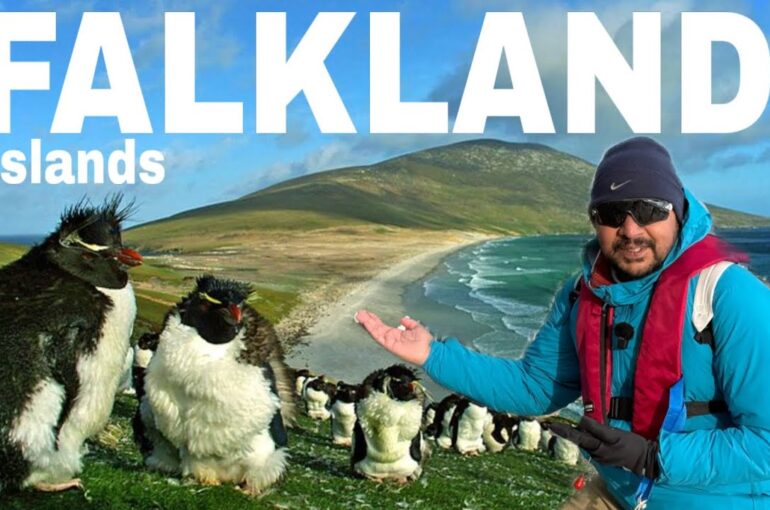
You could travel to the Moon and back in one lifetime with the amount these creatures travel. So, brother, welcome to the Falkland Islands. Namaskar, Salaam, Sat Sri Akal, Ram Ram ji.
So friends, once again we are back on our Pole to Pole journey. At the moment, we are heading towards Antarctica. This cruise was supposed to be around 20–22 days long, and today is Day 2 of our journey.
We woke up early in the morning, had breakfast, and right after that I stepped outside for a walk. Right now, we are sailing through the South Atlantic Ocean. Our cruise will first go to the Falkland Islands, then to South Georgia, and finally to Antarctica.
Honestly, I am not crazily excited about Antarctica itself. I am more excited about South Georgia Island and the Falkland Islands. Falkland has a deep history, and South Georgia is famous for its wildlife. Both islands are completely unique in the world. I will explain the history once we reach the Falkland Islands in the next video, and throughout the journey, I will keep showing you the wildlife. The wildlife here is very different from what we usually see.
At this moment, we are travelling through the South Atlantic Ocean, which is the second-largest ocean in the world. Let me briefly explain its geography. On one side, it stretches from Brazil in the north to Argentina and Antarctica in the south. On the African side, it goes from Ghana down to Antarctica. The vast body of water between the South American and African continents is called the South Atlantic Ocean.
Since yesterday, our ferry or cruise has been sailing non-stop, and all we have seen is water—nothing else. Some birds follow the ship constantly. When the ship moves, it leaves water currents behind, bringing fish closer to the surface. The birds catch these fish for food, which is why they keep following the ship. I will share more information about these birds later.
This ocean is about 8,000 km long and 6,000 km wide, covering nearly 20% of the Earth’s surface. The average depth is around 3 km, but at one point called the South Sandwich Trench, it goes as deep as 8.5 km—almost as high as Mount Everest is tall. Incredible, isn’t it?
There are also black smokers, which are underwater volcanoes found in this ocean. Sometimes the waves become extremely dangerous, and I will definitely show you those scenes later.
After breakfast, I returned to my room and found that the crew had already cleaned everything. They told us that room cleaning happens daily between 8:00 am and 11:00 am, which is really nice.
Today, there are three programmes scheduled:
- Morning: breakfast and a session explaining different birds
- Afternoon: lunch around 12:00 pm
- Evening: training on how to use the Zodiac boats (small boats used for landings), including safety precautions
Around 5:00 pm, we were also given rubber waterproof boots, which are compulsory when transferring between boats and landing on shore.
Today is our second day. We came up on the deck for bird watching. They explained about the Albatross, the largest flying bird in the world. It lays one egg every two years, can live up to 60 years, and has a wingspan of nearly 3 metres. Some Albatrosses can travel 10,000 km in just 20 days. Over their lifetime, they could travel to the Moon and back multiple times.
At lunchtime, food was served at the table instead of a buffet. On cruises like this, limited food is served to avoid sea sickness.
We were given life jackets and waterproof boots for landings. The sea was still very rough, and the entire ship was swaying badly. Handrails were placed everywhere so people could hold on while walking.
After 36–38 hours at sea, we finally saw land for the first time. We arrived at the Falkland Islands. We were taken down in Zodiac boats and shown around the island.
The Falkland Islands have a rich and intense history. Despite being so remote, they have seen major conflicts. Only ferries operate here regularly, and flights are very rare—especially for tourists.
Our Zodiac was ready, and we packed all our equipment, including the tripod. If we spot seals or penguins, I will show them properly and also do some serious photography. These photos will be uploaded on my Instagram, so do follow me there.
Before landing, we had to clean our shoes properly to protect the local wildlife and ecosystem. Only after disinfecting our boots were we allowed to step onto land.
Finally, we landed on West Point Island, part of the Falkland Islands, which is a British territory. The temperature today was around 7°C, which felt comfortable.
The Falkland Islands consist of around 600–700 small islands, with two main ones—East Falkland and West Falkland. We are currently on the west side. After crossing the hills and walking about 3 km, we reached a penguin colony.
Only one family lives on this island. Just two or three people live here, and no one else. But the number of birds here is incredible. The winds are so strong that even trees grow bent in one direction.
At last, we reached the western part of the Falkland Islands. This place is silent, remote, and unbelievably beautiful. I even opened my jacket zip—it’s that comfortable.
The temperature has gone up to around 8°C. All these places you see here—birds have built their nests inside them. After so many of you suggested it, I did bring my drone, but flying drones is strictly not allowed here.
Now we need to go over there. The people heading in that direction are all from our team. Only one family lives on this entire island. When we were getting off, they told us that if anyone finds it difficult to walk, the man who lives here can drop them on the other side in his vehicle. That vehicle has arrived now. Two elderly people from our group will go in it.
Look at this—the vehicle number plates here start with “F”, which is special to the Falkland Islands. They have their own currency and their own vehicle registration system. Everything functions like a separate country, even though it is officially part of the UK.
This grass is the most important feature here. It grows up to 4 feet tall. Birds come here from faraway places to lay eggs, build nests, raise their chicks, and then fly back to the ocean. Many birds spend most of their lives at sea and only come to land for breeding.
You can see many birds sitting quietly here—complete pin-drop silence. This one seems to be saying, “Why are you coming into our path?” There must be eggs nearby. So, for safety, we moved away. Down there, chicks are playing.
Humans have created borders even here. Countries already have borders, and now even mountains have borders. The cliffs here are beautiful. Near the sea, birds lay their eggs on the cliffs.
Before entering again, you have to wash your feet. Fencing has been installed to protect wildlife—so animals don’t cross into restricted areas. This is a penguin and albatross colony, and finally, we get to see them.
And wow—penguins and albatrosses! These are Rockhopper penguins—they look fancy with their eyebrow-like feathers. Colourful, stylish, and full of attitude. I clicked loads of photos—absolute fun.
About the albatross: it is the largest long-distance flying bird in the world. It lays one egg every one or two years. The nests they build are incredibly beautiful. Both parents take turns incubating the egg. It takes nearly one year for the egg to hatch, and after about two years, the chick finally flies away.
Some albatrosses may look small from afar while we’re at sea, but they are very heavy birds. Some have wingspans of up to 3 metres. They can travel 10,000 km in just 20 days. Over their lifetime, they could travel to the Moon and back multiple times. Their lifespan is close to 60 years.
We are now leaving the penguin colony. The Zodiac pick-up point is about 2.5 km away, so we have to climb back uphill. This place is unbelievably beautiful. I haven’t seen such natural beauty in a long time. You’ve been watching my Iceland videos—this place is completely different. Iceland is the north edge of Earth, and this is the western edge. The wildlife here is truly unique.
I told you earlier—this is a Pole to Pole journey. At one pole, you’ll see penguins; at the other, you’ll see polar bears. The journey ahead will be amazing.
These penguins were a bit dramatic—small in size, about 1.5 feet tall. Only one family takes care of this entire island, and they’ve maintained it beautifully. Grass is fenced so birds can lay eggs safely. This creates a natural boundary between humans and birds.
I spent nearly 2.5 hours here just sitting and watching—how they talk, fight, play, and jump. The albatross truly won my heart. I used to boast about cycling 13,300 km in my life—it took me 10 years. An albatross can do that in one year.
They can fly at speeds of 80 km/h, and with favourable winds, even faster. Living near the Antarctic Ocean, they circle the Earth, playing with the wind—adjusting their wings like old-time sailors used sails.
There’s even an airport here. A small aircraft can land right near where our cruise is anchored—on a rough runway. What an experience!
Unfortunately, I made a mistake—I rotated my mic again, and some recordings got ruined. I’ll use a backup mic now. Fingers crossed.
This family also brings tourists here. That vehicle has gone back now. Their income comes mainly during the tourist season. Only two or three people live here.
The flowers here are stunning. We’ve returned to what you can call the “port”—it’s more like a small house. After returning, we still had to wash our shoes again.
After lunch and some rest, we headed towards Carcass Island, which is also part of West Falkland. Today, we’re exploring the west side; tomorrow, we’ll move east.
Our Zodiac crew is ready—fun people to talk to. One of the birds here, named Cara, is a bit dangerous. It’s like an eagle or hawk. If it has chicks nearby or sees food in your hand, it may attack.
We reached Carcass Island. We walked across the island and later got picked up again. Only three people live here. In winter, they move to the main city; in summer, they return here.
This island is about 2 km wide and 10 km long, with a total area of 18 sq km. The highest point is 215 metres above sea level.
This grass hides bird nests—you’ll spot them everywhere. There are around 113 plant species here. Some are native, and some were introduced for survival. Everything is managed carefully to protect the environment.
Now we’re at the beach. Look at all these penguins. A mother is teaching her chicks how to walk towards the sea. The little ones are acting like heroes—running, jumping, and making a scene.
There are two bird colonies here. The bushes you see are actually penguin homes. They rest in one area and live with their eggs in another—just like we go to a sitting area and then return home.
After travelling 810 km, our ship is standing far away in the sea. We walked through muddy land to reach the Zodiac pick-up point.
Sadly, even here, trash has reached from thousands of kilometres away. No matter how eco-friendly we try to be, waste still travels. Please keep your surroundings clean—if nature survives, we survive.
A Taiwanese girl with us collected all the trash she could and carried it back in her bag to dispose of properly. Truly admirable.
We boarded the Zodiac again and headed back to the ship. After bathing, dinner, and rest, we’ll end the day there.
Finally, after a long wait, the Zodiac arrived. The cruise ship was parked 3–4 km away. The water is crystal clear, though I got completely soaked.
We washed our feet again, and now the Zodiac is ready. Through this small gate, we head back inside.