

High Altitude: Can I survive this? in PERU Pole-48
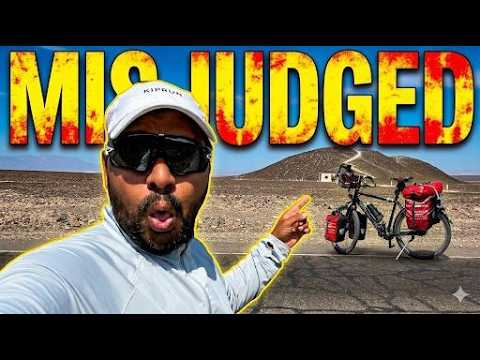
Hello, Namaskar, Salaam, Sat Sri Akal, Ram Ram ji everyone! Once again, welcome back to my channel.
Right now, we are in Peru, in a small city called Puno, where Lake Titicaca is located.
In the previous video, you saw our cycle “Dhanno”, and now we are ready to leave. From here, we will head towards Arequipa, which is around 300 km away.
For that, I first need to climb uphill and then descend again. Earlier, our plan was to go towards Cusco, but we cancelled it because we would have had to stay at very high elevation for almost 1,000 km, and my health is not allowing me to remain at such high altitude for a long time.

So now we are leaving from here and heading towards Arequipa.
This was the hostel where I stayed. People here are very helpful. That lady could have gone, but she stayed back just to hold the gate for me.
Today, I am not using the front camera because today’s ride is all about climbing with the bicycle. The first 120 km is uphill, and after that, around 170 km is downhill.
Look at the sunlight already at 8:00 in the morning.
I have climbed around 40–45 km above Puno, and now it has started getting cold. I have reached about 4,300 metres above sea level, and it is already 2:00 PM.
The route ahead will mostly remain flat for some distance now. I found this small restaurant, so I stopped here for a while to eat something.
This is how coffee is served here. They give coffee extract, and then you add sugar and hot water yourself. There is no milk here.
The highway is slightly better here, but overall, roads in Peru are not that great. I already rode 150–200 km earlier too, and honestly, it wasn’t very enjoyable. Most roads are single-lane roads, and I think riding all the way to Lima on such roads is going to be difficult.
A river is flowing alongside the road, and I have to keep climbing along it. Snow-covered mountains are visible ahead.
Every 2–3 km, there is a signboard on the road. I am also seeing many alpacas around.
Here, houses are basic and unfinished, but churches are properly built and beautiful. Look behind me — the church is solid and beautiful, while all the houses nearby are mud houses.
Climbing uphill at this altitude is very difficult. The slope is gradual, but riding with so much luggage at high altitude is exhausting.
I found a small roadside stop where alpaca meat is sold.
Since morning, I have already covered around 70–80 km, and still around 40–45 km are left. Thankfully, the wind is in my favour, so riding feels better, and I am moving quite fast.
I bought some basic items, water, and also took a room for the night. I parked the bicycle outside.
Now we are at around 4,500 metres above sea level. My condition is getting worse. I can barely speak properly.
This is the room they gave me. It is going to be extremely cold here tonight.
I am cooking quinoa. I will eat it with milk. I placed the stove on a plate so that the floor does not catch fire.
Quinoa looks somewhat like sesame seeds. I also had porridge with me, but I decided to eat quinoa because it feels lighter and might help with breathing.
I have already worn double layers of clothes. Tonight, the temperature is expected to go down to -2°C, and the “feels like” temperature may reach -5°C.
There is no heater in this room, so I will quickly eat and get inside the blankets. I am not going to work on anything tonight.
Good morning, friends!
I woke up after sleeping under four blankets. I made some tea.
Now let me show you how cold it was — ice has formed outside. It is already 8:00 AM.
Today is probably the last day of extreme cold for this journey because right now we are at 4,500 metres above sea level, and within the next 4–5 hours we will descend to around 3,500 metres.
From here, Arequipa is around 150 km away. It is a famous historical and volcanic city in Peru.
This was my room. It was basically a small roadside hostel. There is a restaurant downstairs and three or four rooms upstairs.
Today we will try to reach Arequipa because yesterday we only managed around 110–112 km and my condition became very bad, although we reached before sunset.
I have worn gloves, multiple layers, and warm clothes because the temperature right now is 2°C, but later it may rise to 15°C, so I will need to stop and change clothes on the way.
Traffic on this highway has suddenly increased over the last 20 km.
And just as they say “troubles begin immediately”, I got a puncture right after starting the ride! I had to unload all the luggage and repair it.
This road has dangerous traffic. Many trucks carrying explosive materials pass through here in groups of 20–20 vehicles. Whenever they pass, I stop on the side.
These roadside areas are mostly truck stops and dhabas.
Look at these alpacas.
The animals people generally call llamas actually come in three types — llama, alpaca, and another species commonly found in Chile. I will explain their differences later somewhere while resting.
The traffic is intense, but interestingly, the alpacas are not scared of the trucks at all. They might get scared of me, but not of huge trucks!
There is a waterfall around 1.5 km away, but I decided not to go because the road is unpaved and I have already shown many waterfalls before.
Look at this beautiful view. And there — a strange-looking rabbit!
This region is famous for mining.
Around Puno, there is gold mining, while around Arequipa there is copper mining. That is why so many trucks move on these roads.
The scenery here is beautiful. A valley has formed here, and the green water streams look amazing.
For the last 4–5 km, I have been walking with the bicycle. I have now reached around 4,408 metres, and I still need to climb to 4,600 metres.
There is also a railway line here. It comes from a place called Juliaca. This railway line dates back to British times. During those days, the British used it to transport silver, gold, and copper towards the coast.
Now we are also moving towards the coast, although it is still around 400–450 km away.
The climb is exhausting, but one good thing is that people here are kind. Many greet me and ask if I need help.
Look at these mountains — they are strange and beautiful at the same time. The landscape has completely changed.
Earlier, people used to live in houses like these here. This structure looks like a house with four or five rooms.
There is also a huge rat-like animal here. Every time it sees me, it runs away. I have spotted it three or four times already.
The views are absolutely stunning. The only problem is the traffic.
Look at that mountain — it almost looks naturally cut into a circular shape.
Traffic moves in long chains here. One vehicle overtakes, and then five more vehicles follow immediately behind it.
The landscape is incredible. Llamas and sheep graze together here.
And now, we still have to climb that mountain ahead.
For the last 60 km, traffic on this road has been extremely heavy.
Right now, the railway line that had been running alongside the road is moving ahead separately. From here onward, they have built a proper railway route.
Most of the trucks here move in convoys. Honestly, this is the first time I have seen truck convoys like this. Around 10 trucks move together. One vehicle drives in front, and then all the trucks follow behind in sequence.
Once all 10 trucks gather together, the convoy leaves. They travel around 60 km ahead towards the mines. The trucks load mining material there and bring it back here. Then the cargo is shifted into railway wagons, and the railway transports it further towards the ports.
That is how these convoys operate.
Now this convoy has around 10–11 trucks. One leading vehicle goes ahead, and then all the trucks follow. I have seen army convoys many times before, or convoys formed during emergencies, but this is different.
Every truck has a number written on it — 1, 2, 3, 4, 5, up to 10 — and they all move in the exact same order. They do not overtake each other. Since the road is narrow and traffic is heavy, maybe that is why they use convoys.
Now the lead vehicle has arrived. It says “Convoy 10”, meaning 10 trucks will follow behind it.
Look, three trucks have already passed. You can see the number written on them like 3/10. Then comes 4/10, 5/10, 6/10, all the way to 10/10.
And there goes the last truck.
Even the buses are struggling on this road.
I am feeling extremely tired now. I have climbed around 700 metres in elevation, from 3,800 metres to 4,500 metres. High altitude really makes things difficult.
If this same climb was at a normal elevation of 200–400 metres above sea level, it would not have been a problem. But here, it becomes exhausting.
Traffic on this road is also very heavy.
Those containers you see are used for carrying copper. The trucks coming from the mines load these containers completely, and then they are transported onwards by train towards the ports.
Look at this — they have even built a small railway line through the mountains. The train is small but uses double engines.
Wow… the view ahead looks incredible. Snow is lying on the volcanic mountains.
Look at those volcanic mountains in front.
Friends, our cycle “Dhanno” is parked there, and right now we are standing in a valley.
From here, we have to go downhill into the valley. Slowly, we will begin descending.
Before that, look there — that mountain is called Chachani. You can see two mountains there; they are volcanic mountains.
The main one in the middle is called Misti Mountain, and the three mountains together are known as Pichu Pichu.
At this moment, we are standing at 4,320 metres above sea level. Soon we will descend to 3,800 metres, then climb a little again, and finally go down to 2,500 metres where the city is located — the city I need to reach today.
Once we descend further, breathing should become easier over the next few hours because lower altitude helps a lot.
Right now, we are still in the Andes Mountains. We are on a plateau. After around 50 km, the Atacama Desert will begin again — the same desert we left behind in Chile.
What an amazing world this is.
Those trucks far away are heading on the same road we need to take. We came from that side.
Look at this viewpoint — absolutely stunning.
If someone allowed me to float inside this river, it would directly take me into the city. But instead, we have to travel nearly 100 km around the mountains to reach there.
The views are unbelievable.
We still have around 10 km of climbing left, and after that it is mostly downhill all the way.
Honestly, reaching today looks difficult now, but let’s see what happens.
Alright then, let’s eat something.
I found a small restaurant. I did not have any food left with me, so I stopped here.
I add a lot of sugar to my coffee because it feels like my energy levels are dropping.
The man here gave me a small cake as well.
Once caffeine enters the body, it feels a bit better.
Let me show you today’s remaining route.
There are still 95 km left. From here, we will go downhill for a while, then climb a little, and after that mostly downhill again.
It is already 1:00 PM, and honestly we only have about 4–4.5 hours of daylight left. Covering this distance today seems difficult.
Anyway, let’s see.
This shop also had some apples. They were not very fresh, but in an emergency they are fine.
So I bought a few apples, drank coffee, and ate a little cake. Now let’s continue.
Now things have become difficult.
The wind has suddenly become very strong and is blowing directly from the front. Those three volcanic mountains are now much closer.
The wind is so strong that I cannot even ride the bicycle properly. For the last 4 km, I have been walking.
There is a turn about 1 km ahead. I will check if there is any place to stay there.
It is almost 3:00 PM now, and everything changed suddenly because of the wind.
Right now, I am drinking “President Coffee”.
I somehow managed to reach here, but the wind is extremely strong. I am checking if there is any hostel nearby.
A toll gate appeared ahead, but I cannot even climb up towards it because the wind is too powerful.
Look at this — the wind is directly hitting from the front.
I met two travellers here. They came from near Arica, and that is also where I need to go eventually. They are travelling on motorcycles.
We had a really nice conversation.
Tonight, I will stay here because riding in this wind is nearly impossible.
So friends, I got this room for the night.
I have already unloaded my luggage. Now I am going for a shower. The bathroom is downstairs. There is a toilet in the room, but no shower. Hot water is available downstairs.
Look at the view from here.
You can see the three mountains clearly from here, although two are partly hidden.
The wind outside is extremely strong.
Still, I decided to take a bath because I had skipped bathing yesterday too.
Dhanno is parked safely here.
This man here is selling low-quality fuel. He has containers full of oil stored here.
I finished my shower. Now I do not even feel like stepping outside.
The temperature outside has already dropped to 0°C.
I cooked porridge tonight. Yesterday I made quinoa because there was milk left. During the day, I ate apples and cake, but now this will be my proper meal.
Porridge with milk feels good in this cold weather.
Now I will rest.
Tomorrow’s target is only around 70 km. Tomorrow we should reach the big city. From there, I will stock up on food supplies and then continue towards Lima.
Lima is still around 1,000 km away from here.
So now, let’s have dinner, and I will meet you tomorrow in a new video.
Till then, stay happy, stay busy, stay positive, and stay healthy.
Jai Hind, Jai Bharat 🇮🇳