

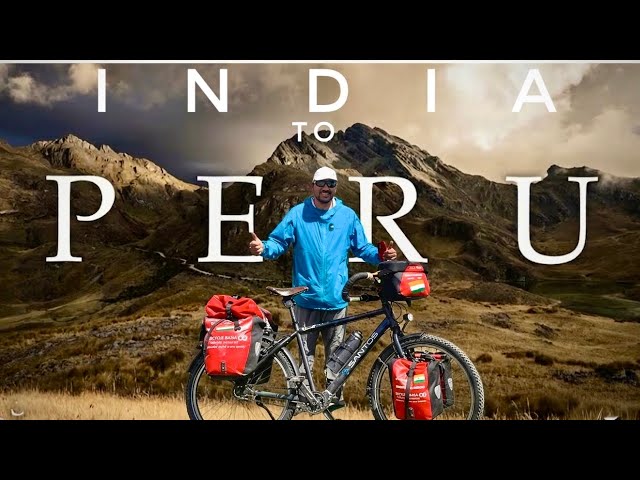
INDIAN 🇮🇳 Enters PERU 🇵🇪 134th Country on BICYCLE. Ep. 46
Welcome to Peru. This is the map of Peru. This is the currency used here, brother. The houses here are also not built like the houses we usually see in India. Earlier, parades used to take place here just like they do in India
Alright friends, this is the last village of Bolivia. This place is called San Pedro de Tiquina. Friends, for the first time we got to see the view of Lake Titicaca. Now we have reached Juli.
Hello, greetings, Sat Sri Akal, Ram-Ram everyone. Welcome once again to my channel. Right now, we are in the 133rd hour of the Pole to Pole journey inside Bolivia. At the moment it is 7:00 in the morning and we are leaving the capital city of Bolivia, La Paz. From here, the border of the next country, Peru, is about 90–100 kilometres away.
It’s now 7:05 AM and we have started early because it’s very important for me to reach the border today. This is my last day here, so I need to cover these 90–100 kilometres in a single day. Slowly we are leaving from here. I stayed in this hostel for about 10–15 days. Once we cross the border, we will see what happens next.
One thing I couldn’t understand: even at 4000 metres above sea level, eucalyptus trees are growing and standing green everywhere.
Friends, for the first time we got a proper view of Lake Titicaca. This lake will stay with us for the next 200–300 kilometres of the journey.
Now we have reached here where the ferry operates. They are not allowing me to take my bicycle directly on the ferry, so I placed my bicycle in a bus. The bus will cross with the bicycle, and I will go separately with my bag. I had requested the bus driver earlier. We have to cross the lake somewhere in the middle. It’s quite a different experience.
There are two or three small boats here that work like ferries. Vehicles go on one ferry while people go on another boat. The boat has just been placed here. From here, the border is still about 30–40 kilometres away. We will travel in the same bus that is carrying my bicycle. Many vehicles are waiting here. Now we are going towards our bus.
This place is called San Pedro de Tiquina. Our bus has also arrived. The place ahead near the border is called Copacabana. Actually, our bus is another one coming from behind. My bicycle is kept inside the bus at the back. Luckily, I managed to find a seat.
 So friends, we have reached Copacabana. From here the border is just about 10 kilometres away. The bus dropped me here, and I have arranged my luggage again. I’ll have some tea or coffee because I am still feeling breathless. We are still around 4000 metres above sea level.
I am currently in Copacabana. The border of Peru is just 10 kilometres away from here. Many tours start from here to explore Lake Titicaca, especially on the Bolivian side. On the Peruvian side there are fewer tours. There are many small islands in the lake, and tours go to those islands. The tribes here first came and settled on those islands. I will tell that story later.
For now, let’s drink some coffee. It’s already 2:00 PM, and today is my last day here. I must cross the border today. I will ride the 10 kilometres first and explore the tours later because there is a steep climb ahead. Taking the bus earlier helped a lot because once we crossed the lake, there was a very dangerous 15-kilometre climb followed by a 15-kilometre descent. If I had tried to cycle it, it would have been difficult and I might have reached late, after the border closed.
My coffee has arrived along with something to eat. They say it is 100% Bolivian coffee. I told them I don’t care which coffee it is, I just want to drink it. I also took some food because I haven’t eaten anything since morning. Strangely, at this altitude you don’t feel very hungry.
Now I have left Copacabana. This town is full of hotels and tourists everywhere. This statue here represents their Sun God. It is related to the story of their first king, which I will tell later.
For the first time, I have seen an airport so close to a border. Only 4–5 kilometres remain before the border and there is a small airport here with a short runway.
Here we are — the last village of Bolivia. The village is called Kasani. The border is just one kilometre from here.
Finally, we reached the border. The Bolivian officials stamped my passport very easily. Now we will cross the Bolivian side and move to the Peruvian side. Earlier, parades used to take place here like in India, but not anymore.
And here we are entering Peru.
Friends, welcome to Peru. I and my bicycle have now reached the 134th country of my journey. My world cycling journey has completed 10 years and I have already covered about 141,000 kilometres. I didn’t even realise when these ten years passed. It is only because of your love and blessings that I have been able to continue this journey.
Right now, this border is at an altitude of about 3700 metres. The last border I crossed between Chile and Bolivia was at 4600 metres.
Peru is a very tourist-friendly country. And the moment you enter a South American country, you always see football. Just 400 metres before the border on the Bolivian side, people were playing football, and here on the Peruvian side they are also playing.
We still have to complete immigration, which is a little ahead. Playing football above 4000 metres is a big thing, which is why the ground here is quite small.
This is the map of Peru. We will travel towards Nazca, then through the desert, and possibly to Lima. I’m not sure yet if we will go to Lima — you will find out tomorrow.
This country has everything: the Amazon Rainforest, deserts, and a rich tribal history. It is quite a historical country.
Now we are going to immigration. This is the immigration office. We got the passport stamp here at the Kasani Border Crossing. Now the next thing I need is a SIM card and some local money, so I will exchange currency.
Immigration is done. The officer asked me, “Is this your first time in Peru?” I said, “No, this is my second visit.” Then he asked, “How many days will you stay?” I replied, “90 days.” Even if I leave earlier, it’s always better to have a 90-day visa to avoid any problems.
Finally, he smiled and said, “Welcome to Peru.”
It felt really nice to hear that.
Immigration officers are rarely seen here. From here I exchanged a little currency. I had some Bolivianos with me, so I converted them. Let me show you the local currency here.
This is the currency here, brother. This is a 50 note, and there are also 20 and 10 notes. The currency is called the Peruvian Sol. Just like we say “rupee” in India, here they say “sol”. So this is the Peruvian Sol. Right now I have around 70–80 soles with me, which will be enough for today. Later we’ll see whether ATMs work here or not.
About 34–40 kilometres from here there is a small city or town. I will stay there tonight and start riding again tomorrow.
Welcome to Peru. As soon as I entered Peru, I noticed that the plants and trees looked a little different. It also feels like there is slightly less poverty here. Peru seems a bit more developed compared to Bolivia. In Bolivia it was rare to see new cars, but here I’ve already seen a Suzuki Swift passing by.
There are also auto-rickshaws here. You can see Bajaj autos running here, and they look quite nice, painted in white. Some of them are even from TVS.
Now we have entered the first village in Peru. So once again, welcome to Peru. Thank you all from the bottom of my heart for your support.
One good thing here is that they have written useful information in the town. The name of this place is Yunguyo, and the elevation is 3,826 metres above sea level. It’s nice that they mention these details.
The houses here are also built differently from the houses in India. There are large gates and compound walls. The feeling of the place has changed. To be honest, I faced a lot of difficulties in Bolivia, though I couldn’t really tell anyone. Even now I still have some problems, and it will probably continue for the next 500–1000 kilometres because the entire route here is around 3700–3800 metres above sea level.
This town looks quite clean. They have statues of dancers here. As soon as you leave immigration, there are many hostels nearby. I was thinking about whether to stay here or ride further, but finally I took a hotel room.
Here it is — room number 203 at Hotel Velparaiso. The bathroom is under the stairs, which feels a bit strange, but it’s okay for now.
I took a shower. Sunset happens here around 5:30 PM, so I’m thinking of arranging three things first: food, a SIM card, and money. If these three things are sorted, there will be no problem. The market here is small, with shops that look similar to small shops in India.
I found a SIM shop online, so I’m going there first to see if it’s open. But today is Sunday, and it’s the Easter weekend, so most shops are closed. The rickshaws here are quite different — they’ve basically attached a passenger seat to a motorbike to make a rickshaw.
This is their small local bus station. A friend from Lima had messaged me earlier and suggested that I buy a SIM from Claro. But unfortunately the shop here is closed.
I noticed something both here and in Bolivia — there are a lot of pharmacies everywhere. The Claro shopkeeper said that to buy a SIM with a passport I would have to go to Puno, which is about 20–30 kilometres from here. They cannot issue it here with a passport.
So now I’m looking for an ATM because I need to withdraw money. If I get money and a SIM card, then everything will be fine.
I walked around a little more and saw another park. Maybe I can find an ATM or a currency exchange shop here. I still have about $200 with me. I went into a bank and found an ATM, but it was asking for an extra fee of 186 soles on a $200 withdrawal, which is too much. So I cancelled the transaction.
So today none of the three things worked — money, SIM card, or exchange — because many places are closed. I will exchange money tomorrow morning.
The police are patrolling around just like in India. Here there is a coffee shop next to an ultrasound centre, then a medical store. There are many medical stores here, and lots of dentists too. In fact, people from the United States come here for dental treatment because it’s cheaper.
It feels a bit like travelling in Ladakh, or maybe Sikkim, or even somewhere in Tibet. The atmosphere is quite similar.
Ahead I saw a proper market area. Maybe I can find something there. Finally, I managed to exchange dollars at a good rate and got local money. So the money problem is solved, but the SIM card is still an issue.
There were three things I needed: SIM card, money, and food. I will manage the food somehow. I found bananas and a melon. Even if I don’t find anything else, the melon will fill my stomach. Earlier I had already eaten an apple and a pomegranate that I bought from a lady near the hotel.
The women here wear a special type of skirt called a pollera. It actually came from Spain originally, but the local women modified it according to their style. These skirts are very heavy, sometimes weighing 4–5 kilograms.
So now I have money and food. If I find a SIM card, that will be perfect. Otherwise, there is an international SIM card that works in any country, but it costs about $6 per month for unlimited data. A friend named Ratan in Lima can arrange it for me using his ID if needed. Otherwise I may have to stay without a SIM for the next two days.
The rickshaws here are quite unique. For the next month I will keep showing you these small things about this country.
Look at the view in front — the lake and the mountains together look amazing. It seems like it is raining somewhere in the distance. The colours of the clouds look beautiful.
Good morning, friends. It’s now 9:00 AM. It rained until about 8:00 AM, then a little sunshine appeared. Last night I fell asleep quickly, but later I had some breathing trouble because of the altitude. My shoes got wet in the rain as well, so they might bother me for an hour or so.
Let me arrange my luggage. I have two bags in the front, two bags in the back, and a handlebar bag on top of the rear ones. This was the hotel where I stayed last night. The room cost about ₹1500.
Now we are leaving the city. Today I won’t ride too much. My plan is to cycle about 50 kilometres. If I find a hotel earlier on the way, I might stop there because strong winds usually start here later in the day.
Before leaving, I need to buy water and something to eat. If I get some milk, I can make porridge because I have oats with me. It’s a bit difficult to find vegetarian food here.
There are not many big supermarkets here. Most of the shops are small local stores, unlike Chile, where large supermarkets are common.
The name of this town is Yunguyo. If it hadn’t rained, the sunrise here would have been at 5:30 AM and the sunset also happens around 5:30 PM.
So I could have taken advantage of that because now the time difference has increased by one hour. I am now 10 hours and 30 minutes behind India. Earlier I was 9 hours and 30 minutes behind. The problem is that the sunset happens early here. In Chile and nearby places earlier, the sunset used to happen around 9:00 or even 10:00 at night, so there was no issue and we could keep travelling late. Now I will have to start riding early in the morning.
Another thing is that after about 11:00–12:00 in the afternoon, very strong winds start blowing here. It is still quite cold. Last night the temperature dropped to around 2°C. Look at the houses — the style is somewhat similar to houses in India. Many villages are coming along the way.
There are elections here as well. In the next few days voting will happen, so there are posters everywhere. The posters usually show four things: the party name, the ballot number, the candidate’s photo, and the election symbol.
Here people keep cows, and in the villages I also saw pigs being raised. Sheep are everywhere. The wind is coming from the front and clouds are gathering. I think it might rain.
Look at this election board. The candidate’s name is something like Pandia, ballot number three, the region is Puno Region, and the election symbol is a helmet.
On one side the sun is shining and on the other side it’s drizzling. Look at this — this is their taxi. They have seated an old woman at the back and three people are sitting together in the vehicle.
Farming is happening here as well. It looks like oats to me, though I’m not completely sure. I will wait for the clouds to pass before continuing because if I get soaked in rain on the first day itself, it will be difficult. I am still at about 3800–3900 metres above sea level, so I have to move slowly and carefully. This area receives a lot of rain and remains cold.
The rain stopped there, so I started moving again. After climbing a small hill and reaching the other side, raindrops had splashed on my face and clothes. But look at this valley — it looks so beautiful.
That woman there is taking pigs along with her, holding three pigs together.
This is a school called Simón Bolívar Model I.E.C School, named after Simón Bolívar. He is considered a hero here — you can think of him as someone like Mahatma Gandhi or Bhagat Singh for this region. He is a real hero across South America.
It looks like rain will start again ahead. When I was in Bolivia, there were even more mud houses. Here about 30–40% of the houses in the villages are still made of mud, but the cleanliness is amazing. Slowly people are converting their homes into concrete houses — usually they build one solid room first.
There are a lot of dogs here, and they bark a lot. After about 1.5 kilometres from the cemetery we will turn right. The area visible over there actually connects to Bolivia as well. There is another border of Bolivia from that side, and the highway comes from there.
Soon we will get onto the highway. Until now I was travelling on a single narrow road.
I stopped to take some water. Everything is available here — animal feed is sold there, cold drinks here, a mini-market here, a hardware shop there, and even cooking oil is sold here. Many vehicles refuel here, maybe because fuel is cheaper than at petrol stations.
The view ahead is incredible. The valley is huge. This is a small village municipality. Surprisingly, they had a stadium here as early as 1998. Just imagine how much importance they give to sports. The stadium is of international quality with proper grass and maintenance.
This is a secondary school. On the mountains you can see terraced farming everywhere.
There are many dogs here and they keep barking. See, this one just barked as well. They really trouble travellers sometimes.
Here is a gate and beyond it the lake. This area belongs to the army camp. From here we have reached close to the lake. This whole area belongs to fishermen. They also prepare fish seeds here. They are making full use of the lake resources.
Right now I have to walk because the climb is steep. The lake is extremely large. You can guess its size by looking at this lighthouse tower. It’s not new — it’s around 100–125 years old.
From here you can also see the town we came from on the other side. The snow-covered mountains in the distance belong to Bolivia.
Some locals asked me:
“Where are you from?”
I said, “I am from India.”
Then they asked, “Where are you going?”
I replied, “Going to Alaska, coming from Ushuaia.”
They were surprised and said, “Wow, Alaska!”
I told them my social media: TikTok and Instagram — Cycle Baba.
Farming here is quite impressive. They are growing potatoes as well. I stopped my bicycle here for a moment. Half the climb is done and half remains.
There is an island in the lake that belongs to Bolivia, while the surrounding area is in Peru. So this lake is divided between the two countries.
I have already covered about 40 kilometres today, and around 10 kilometres remain. But there is still a 200-metre climb ahead. At such high altitudes, climbs become very tiring — especially around 4000 metres.
Before continuing, I need to eat something. Since morning I have only had a small yoghurt. I am not even feeling very hungry, but I’m forcing myself to eat so that I have some energy. In hilly areas this happens a lot — you don’t feel hungry.
Finally, I reached Juli. This town is at about 3,870 metres above sea level. Right now I am around 4000 metres and soon the road will descend by about 100 metres.
Now I will look for a hotel here. The time is 2:10 PM, but honestly I don’t feel like riding further today. I just want to rest.
I found a hostel and parked my bicycle. I bought two coffees, some milk, a turnip, and water. It’s a bit expensive — about 25 soles, which is roughly 8 dollars — but it’s okay.
Now I’m going to the room. I’ll eat something, take some rest, and say goodbye to you all for today.
See you tomorrow with a new video.